Fire damage is devastating. Recovery starts in the next hour.
FSRT-certified soot removal, structural drying, odor elimination, and full restoration — with direct insurance adjuster coordination.
FSRT
IICRC Certification
24/7 Emergency
Response
Same day
Board-Up
Protein/Synthetic
Odor type
Dry/Wet/Abrasive
Cleaning
Full insurance
Coverage
A fire event causes four distinct types of damage simultaneously: thermal damage from the flames, soot and smoke residue that penetrates every surface, water and chemical damage from firefighting suppression, and structural compromise from heat exposure. Most homeowners focus on the visible char and flame damage — but it is often the secondary damage (smoke infiltration, water saturation, and acid-forming soot residue) that causes the most long-term harm if not addressed immediately.
Smoke and soot are not inert substances. When organic materials burn, they release a complex mixture of carbon particles, volatile organic compounds (VOCs), polycyclic aromatic hydrocarbons (PAHs), and acid-forming compounds. Within hours of a fire, soot begins etching metal surfaces, staining grout and tile, and permanently yellowing plastics. Protein residue from kitchen fires — one of the most common types — is near-invisible but creates an extremely difficult-to-eliminate odor.
First Response Restoration's FSRT (Fire & Smoke Restoration Technician) certified crew begins restoration immediately after the fire marshal clears the structure. We work under emergency board-up and tarping to prevent additional weather damage, then systematically address each damage type — soot, water, odor, and structural — in the correct sequence.
The four damage types in every fire event
Understanding the distinct damage types is essential to proper restoration. Thermal damage affects structural integrity. Smoke and soot infiltrate every surface, crack, and void in the structure — including inside HVAC ducts. Water damage from firefighting suppression creates a secondary moisture event. Chemical damage from residue begins immediately after the fire is out, and accelerates rapidly without professional intervention.
Soot chemistry and the science of odor elimination
Different fire sources produce chemically distinct soot types, each requiring a different cleaning approach. Dry soot (from fast-burning fires, paper, wood) can be vacuumed before wet cleaning. Wet or oily soot (from slow-burning synthetic materials, plastics, rubber) requires chemical solvents. Protein residue (from cooking fires, food, grease) is nearly invisible but creates severe odor that requires enzymatic treatment and thermal fogging to eliminate.
Why immediate action after a fire is critical
Real jobs. Real results.
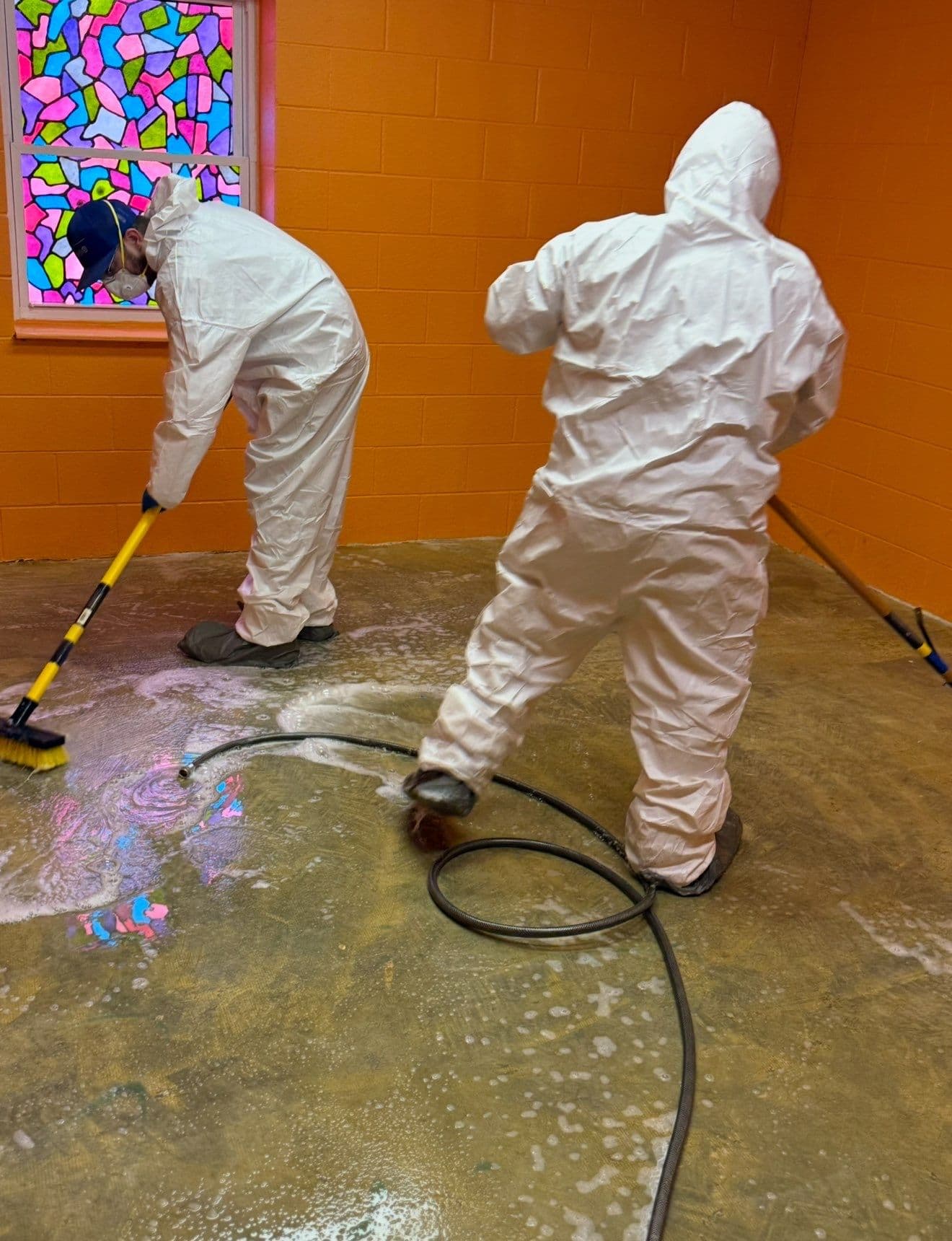
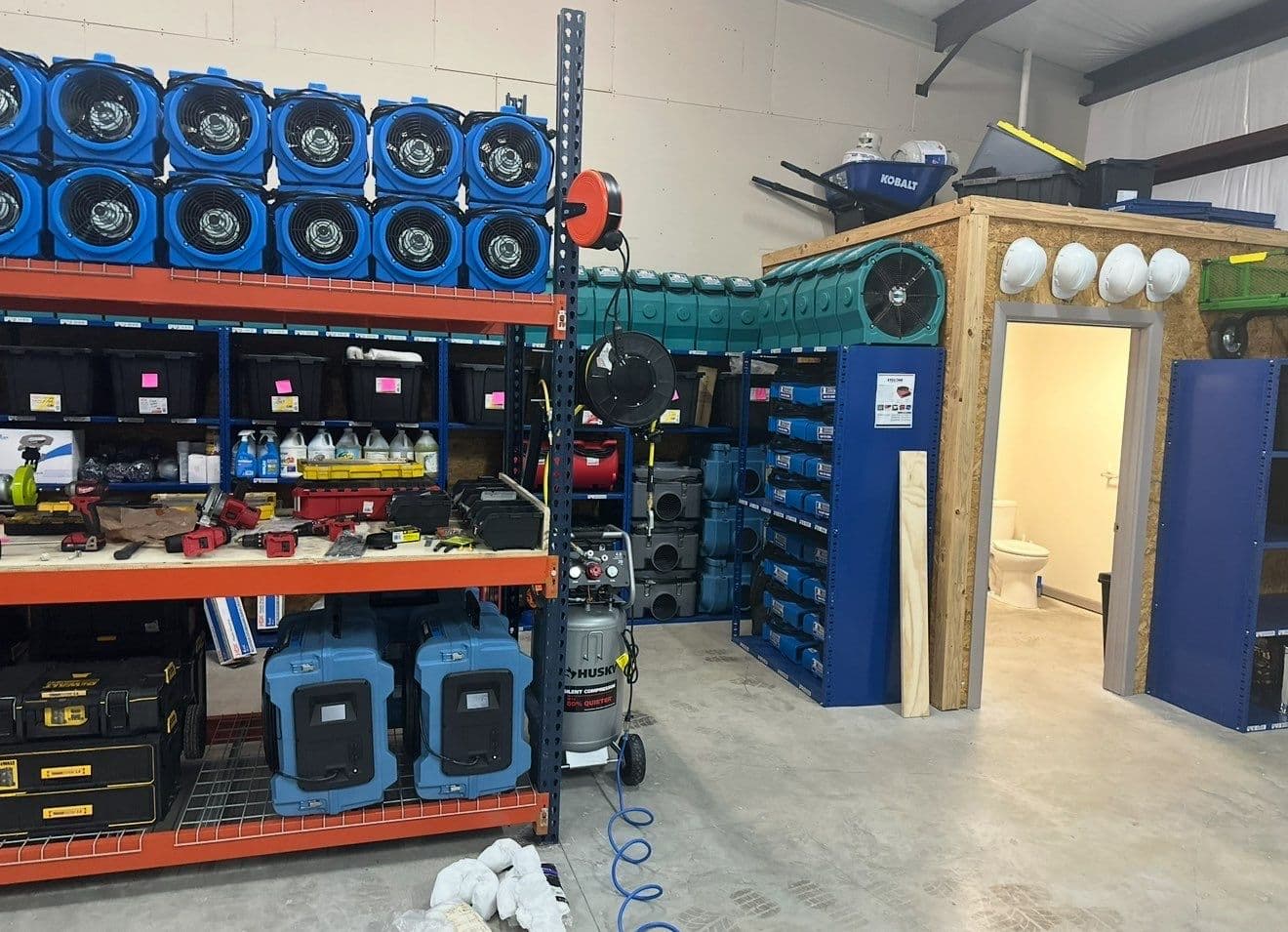

Our fire & smoke damage restoration process — step by step
Emergency board-up & tarping
We secure your structure immediately after fire marshal clearance. Windows, doors, and roof openings are boarded and tarped to prevent weather intrusion, theft, and further contamination.
Damage assessment & scope documentation
A comprehensive damage assessment covers all four damage types: thermal, smoke/soot, water, and structural. All findings are documented with photographs and Xactimate estimates for your insurance adjuster.
Water extraction & drying
Firefighting suppression leaves significant water. We extract standing water and set structural drying equipment immediately — preventing a secondary mold event on top of fire damage.
Contents pack-out & inventory
Salvageable contents are carefully packed, inventoried, and moved to our climate-controlled facility for professional cleaning and restoration. Destroyed contents are documented for insurance replacement.
Soot removal & surface cleaning
Appropriate cleaning methods are applied by surface type and soot type. Dry sponge cleaning precedes wet methods. Chemical solvents for oily soot. Enzymatic treatment for protein residue. HVAC system cleaning and duct deodorization.
Odor elimination
Thermal fogging penetrates the same voids smoke traveled. Hydroxyl generators treat air continuously. For severe cases, ozone treatment after evacuation eliminates residual odors at the molecular level.
Structural restoration & rebuild
Damaged structural elements, drywall, flooring, cabinetry, and finishes are replaced. We manage the complete rebuild under one contract, coordinating all trades and working directly with your insurance carrier.
Equipment we use — and why it matters
Professional restoration requires professional equipment. Here's exactly what we bring to your property and why each piece is critical.
Thermal Fogger
Deep odor penetration
Converts deodorizing solvent into a fog that penetrates the same pathways smoke traveled — into wall cavities, HVAC ductwork, and porous materials. Most effective odor treatment available.
Hydroxyl Generator
Airborne odor and VOC neutralization
Produces hydroxyl radicals that break down odor-causing compounds at the molecular level. Faster and more complete than ozone for occupied or semi-occupied spaces.
Ozone Generator
Odor elimination in evacuated spaces
High-concentration ozone treatment for severely smoke-damaged spaces. Requires evacuation of all people, pets, and plants. Highly effective for penetrating odors in structural materials.
HEPA Air Scrubber
Airborne soot and particle removal
Captures fine soot particles during restoration work. Prevents cross-contamination of clean areas during cleaning operations.
Dry Sponges
Initial soot removal
Non-water sponges used to remove loose dry soot before any wet cleaning — critical because wetting dry soot embeds it permanently in surfaces. Type-specific to the soot chemistry.
Chemical Soot Sponges & Cleaners
Wet soot cleaning
After dry sponge removal, chemical cleaners matched to soot type (dry, wet, protein) remove residue from non-porous surfaces.
Ultrasonic Cleaning Tank
Contents restoration
High-frequency sound waves in cleaning solution remove soot and smoke residue from hard-surface contents — electronics, kitchenware, tools — without abrasion.
How much does fire and smoke damage restoration cost?
Fire restoration costs depend heavily on the extent of burn damage versus smoke/soot damage. Smoke damage often extends far beyond the fire area. Most fire damage events are covered by homeowner's insurance.
Contained kitchen fire — smoke damage to single room
Surface cleaning, odor elimination, limited structural work. Typically fully covered.
Moderate fire — one or two rooms of burn damage
Structural repair, smoke throughout structure, HVAC cleaning, contents pack-out.
Significant fire — major structural damage
Extensive structural replacement, full contents pack-out, temporary housing (ALE covered). Board-up and tarping emergency services.
Total loss or near-total loss
Demolition, debris removal, complete rebuild to current code. Insurance adjusters handle scope.
Homeowner's insurance covers fire damage and resulting smoke/soot damage throughout the structure. Act immediately — soot damage accelerates within hours and smoke odor permanently embeds in porous materials within 48–72 hours.
Fire damage claims: the most complex in property insurance
Fire claims are typically the largest residential property insurance claims and are scrutinized carefully by adjusters. The scope of damage is often much larger than the visible burn area — HVAC contamination, contents losses, smoke infiltration to adjacent rooms, and full structural rebuild can substantially increase the claim value. Our Xactimate documentation captures every line item.
Fire damage restoration in Houston and the Gulf Coast
Houston's housing stock includes significant concentrations of 1970s–1990s construction featuring aluminum wiring, polybutylene plumbing, and building materials that create complex fire chemistry when ignited. The region's high humidity means that secondary water damage from firefighting suppression dries more slowly than in arid climates, increasing mold risk. Our teams have extensive experience with Houston's specific building types, including pier-and-beam foundations that allow fire and smoke to travel under structures, and slab-on-grade construction common in post-1990s subdivisions. We serve the full Houston metro including Katy, Sugar Land, The Woodlands, Pearland, and surrounding communities.
Frequently asked questions
Can smoke-damaged items be restored or do they have to be replaced?
Many smoke-damaged items can be restored through professional cleaning — but the success depends on the material, the intensity of smoke exposure, and how quickly cleaning begins. Hard surfaces (metals, glass, ceramics) generally clean well. Porous soft goods (upholstered furniture, mattresses, carpet) absorb smoke odor deeply and are usually more cost-effective to replace than restore. Electronics require specialized cleaning to remove conductive soot residue. Clothing and linens can often be restored through professional ozone treatment and ultrasonic cleaning. We assess every item individually and make restore vs. replace recommendations based on both effectiveness and cost.
What does fire damage restoration cost?
Fire damage restoration ranges from under $10,000 for a small contained kitchen fire to $100,000+ for a whole-house fire requiring full structural rebuild. The primary cost drivers are: total square footage of smoke and soot damage (often the entire house, not just the burn room), extent of structural damage requiring demolition and rebuild, contents pack-out and restoration, temporary living expenses, and HVAC cleaning and replacement. We provide detailed Xactimate estimates that break down every line item and reflect current Houston-area labor and material rates.
Is it safe to stay in my home after a fire?
This depends entirely on the extent of damage and what systems were affected. A contained kitchen fire may allow occupancy of other rooms. A significant structural fire will require evacuation until utilities are cleared, structural safety is confirmed, and air quality is tested. Smoke and soot residue are health hazards, and the combustion byproducts from synthetic materials are particularly toxic. Your safety is the first priority — we help coordinate with the fire marshal and can arrange temporary housing documentation for your insurance's Additional Living Expense coverage.
How long does smoke odor last if untreated?
Untreated smoke odor can persist for years. Smoke molecules bond to porous surfaces — wood framing, insulation, drywall, and flooring — at a molecular level. Without professional treatment (thermal fogging, hydroxyl, or ozone), the odor will continue to off-gas indefinitely, especially in warm weather when volatile compounds re-activate. Every real estate disclosure law requires disclosure of fire damage history, and persistent odor is the most common reason fire-damaged properties fail resale.
My insurance company wants to send their own restoration contractor. Do I have to use them?
No. In Texas, you have the right to choose your own licensed contractor. Insurance carriers sometimes recommend or assign preferred vendors, but you are not obligated to use them. Preferred vendors often have negotiated rate agreements with carriers that may not reflect a full scope of your loss. We work with your carrier directly — our Xactimate estimates match the same format your adjuster uses — ensuring you receive a fair settlement regardless of who your carrier recommends.
Need help now? We respond in 60 minutes.
24/7 emergency response — IICRC certified — insurance handled.