Water damage gets worse every hour it sits.
IICRC S500-certified extraction, structural drying, and mold prevention — on-site in 60 minutes, 24/7.
S500
IICRC Standard
WRT + ASD
Certifications
60 Minutes
Response Time
24–48 hrs
Mold Risk Window
24/7/365
Availability
Insurance-ready
Documentation
When water enters a structure — whether from a burst pipe, appliance leak, flash flood, or sewage backup — the damage begins immediately. Within minutes, water migrates through porous materials: drywall, insulation, subfloor, and framing. Within 24 to 48 hours, conditions become favorable for mold colonization. Within 72 hours, structural components begin to swell, warp, and delaminate. Professional water damage restoration is not optional — it is a race against time.
First Response Restoration follows the IICRC S500 Standard for Professional Water Damage Restoration — the industry benchmark that defines proper extraction, drying, monitoring, and documentation protocols. Every technician on our crew holds WRT (Water Damage Restoration Technician) and ASD (Applied Structural Drying) certifications, meaning we understand the psychrometrics of structural drying, not just the mechanics of running equipment.
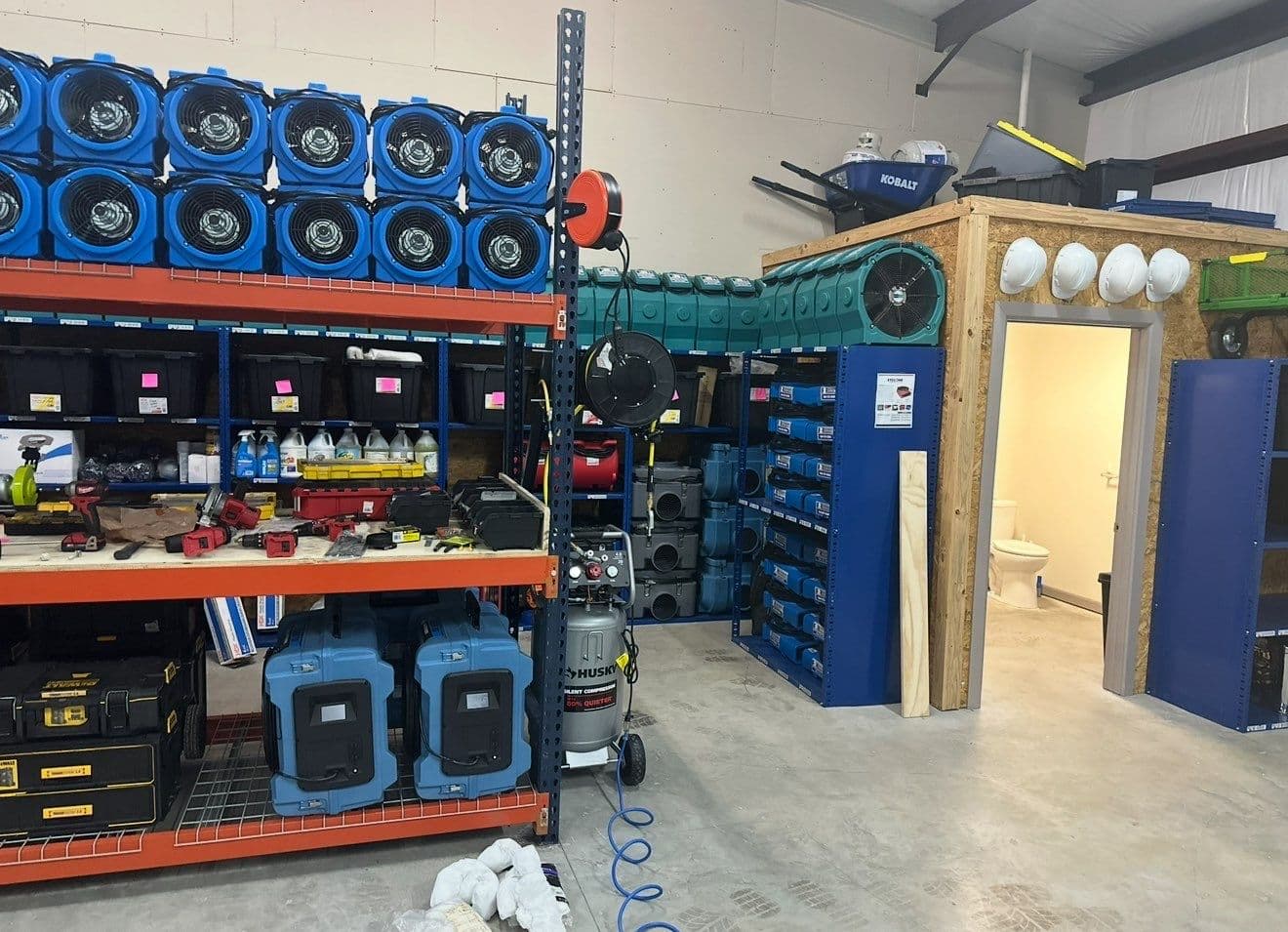
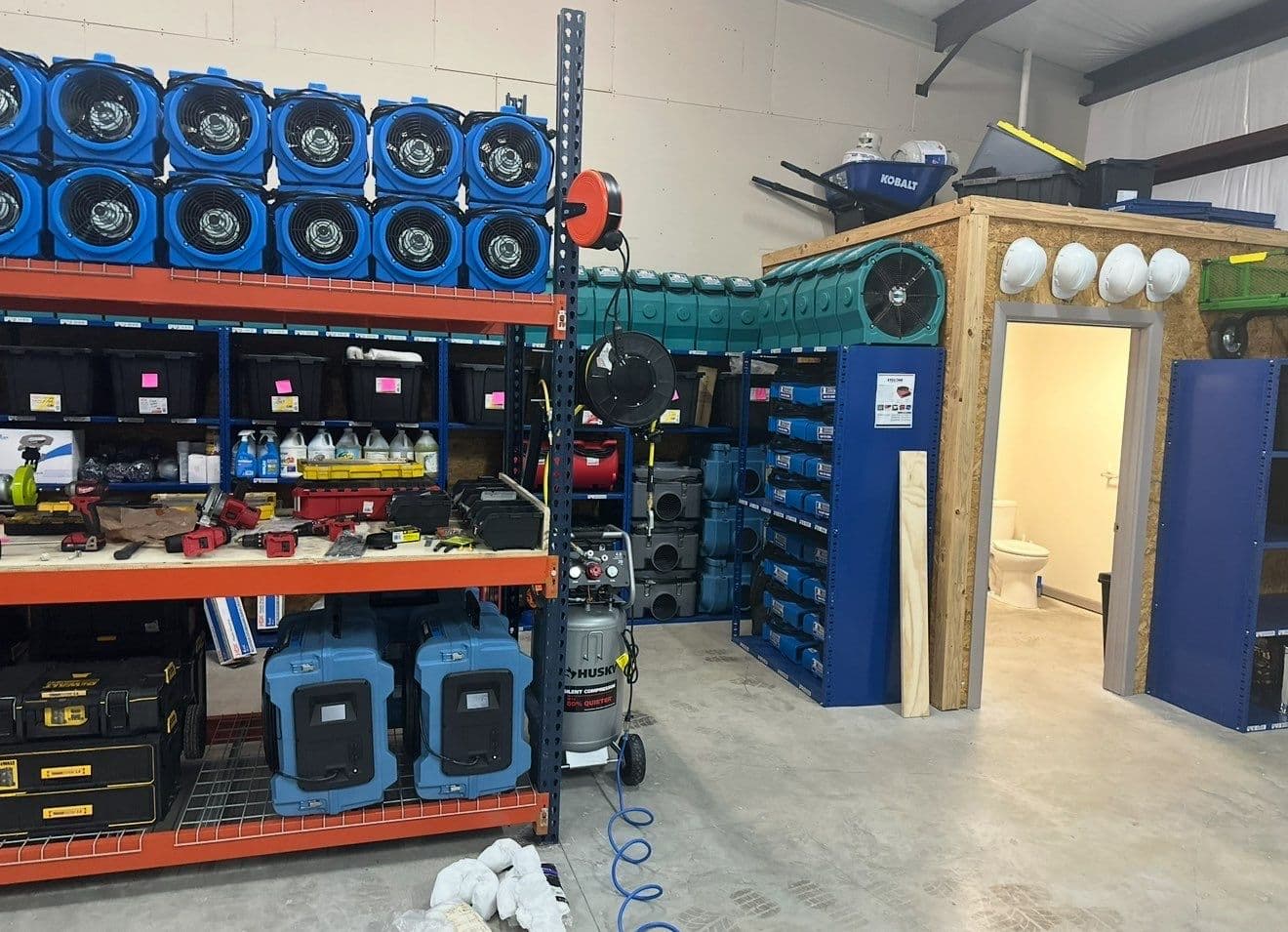
We operate in Houston and across 10+ states because water damage does not follow business hours. Our fully stocked trucks deploy within 60 minutes of your call — carrying truck-mounted extractors, LGR dehumidifiers, axial air movers, thermal imaging cameras, and professional monitoring equipment. From the first moisture reading to the final clearance test, every step is documented for your insurance claim.
Water damage categories — and why they matter
The IICRC S500 standard classifies water damage by contamination level. The category determines what materials can be saved, what must be removed, and what decontamination protocols apply. Misclassifying water damage — or skipping classification entirely — is one of the most common errors made by uncertified contractors, and it can create serious health hazards.
Supply line break, faucet overflow, rainwater. Lowest risk — materials can often be dried in place.
Washing machine discharge, dishwasher, toilet overflow without feces. Biological contamination present.
Sewage backup, floodwater, groundwater. Grossly contaminated — all porous materials must be removed.
The science of structural drying: psychrometrics
Structural drying is not simply running fans and dehumidifiers. It is applied psychrometrics — the science of air-water vapor relationships. Our technicians measure and track relative humidity (RH), specific humidity, dew point, vapor pressure, and grains per pound (GPP) throughout the drying cycle. These readings determine the proper equipment configuration, placement, and duration required to reach dry standard without over-drying or under-drying structural materials.
Signs you have water damage that needs professional attention
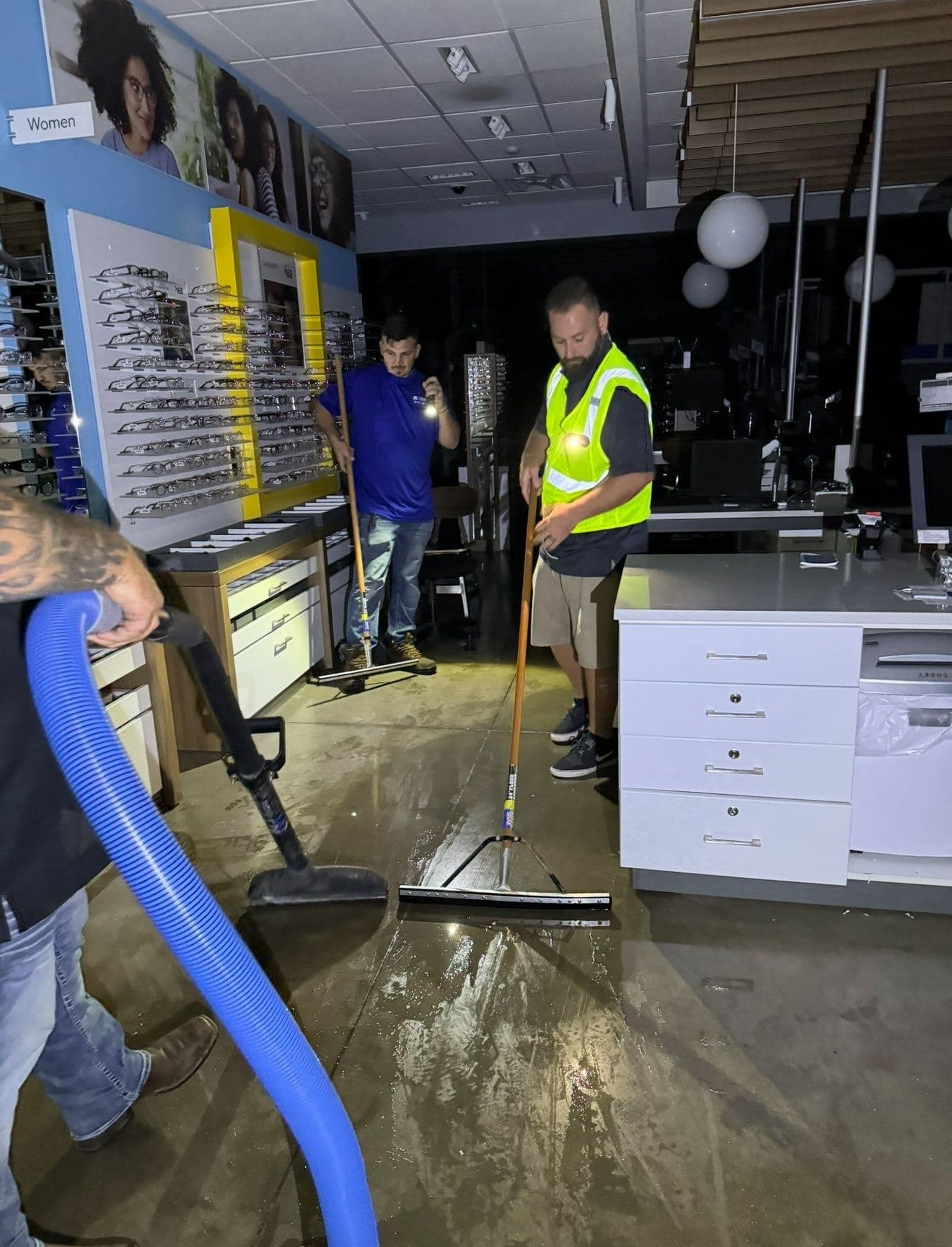
Real jobs. Real results.
Our water damage restoration process — step by step
Emergency response & containment
We answer 24/7. A certified technician assesses the situation by phone, dispatches the nearest crew, and advises on immediate steps to limit further damage.
ETA: 60 minutes or less from your call.
Moisture assessment & documentation
On arrival, we perform a full moisture assessment using thermal imaging cameras and pin/pinless moisture meters. Every affected area is documented with readings, photographs, and moisture maps — this becomes your insurance claim file.
Equipment: FLIR thermal camera, Delmhorst moisture meters, industrial hygrometers.
Water extraction
Truck-mounted extractors remove standing water at high volume. Portable extractors access areas trucks cannot reach. Submersible pumps handle flooding scenarios.
Our truck-mounted units process up to 25 gallons per minute.
Structural drying system setup
LGR dehumidifiers and axial air movers are placed according to a psychrometric drying plan. Equipment configuration depends on the Class of damage, ambient conditions, and material types present.
Daily monitoring and readings until dry standard is reached.
Antimicrobial treatment
EPA-registered antimicrobial agents are applied to all affected materials. This is standard on every water damage job — not an upsell — because mold prevention is easier than mold remediation.
Applied per IICRC S500 and EPA label instructions.
Daily monitoring & documentation
We return daily to record moisture readings and adjust equipment. All readings are logged and time-stamped, creating an auditable drying record for your insurance adjuster.
Average drying time: 3–5 days depending on Class and conditions.
Final clearance & restoration
Once materials reach dry standard, we perform a final inspection and clearance reading. Damaged materials are removed, and full structural restoration and rebuild begins.
We manage the full restoration — one contractor, start to finish.
Equipment we use — and why it matters
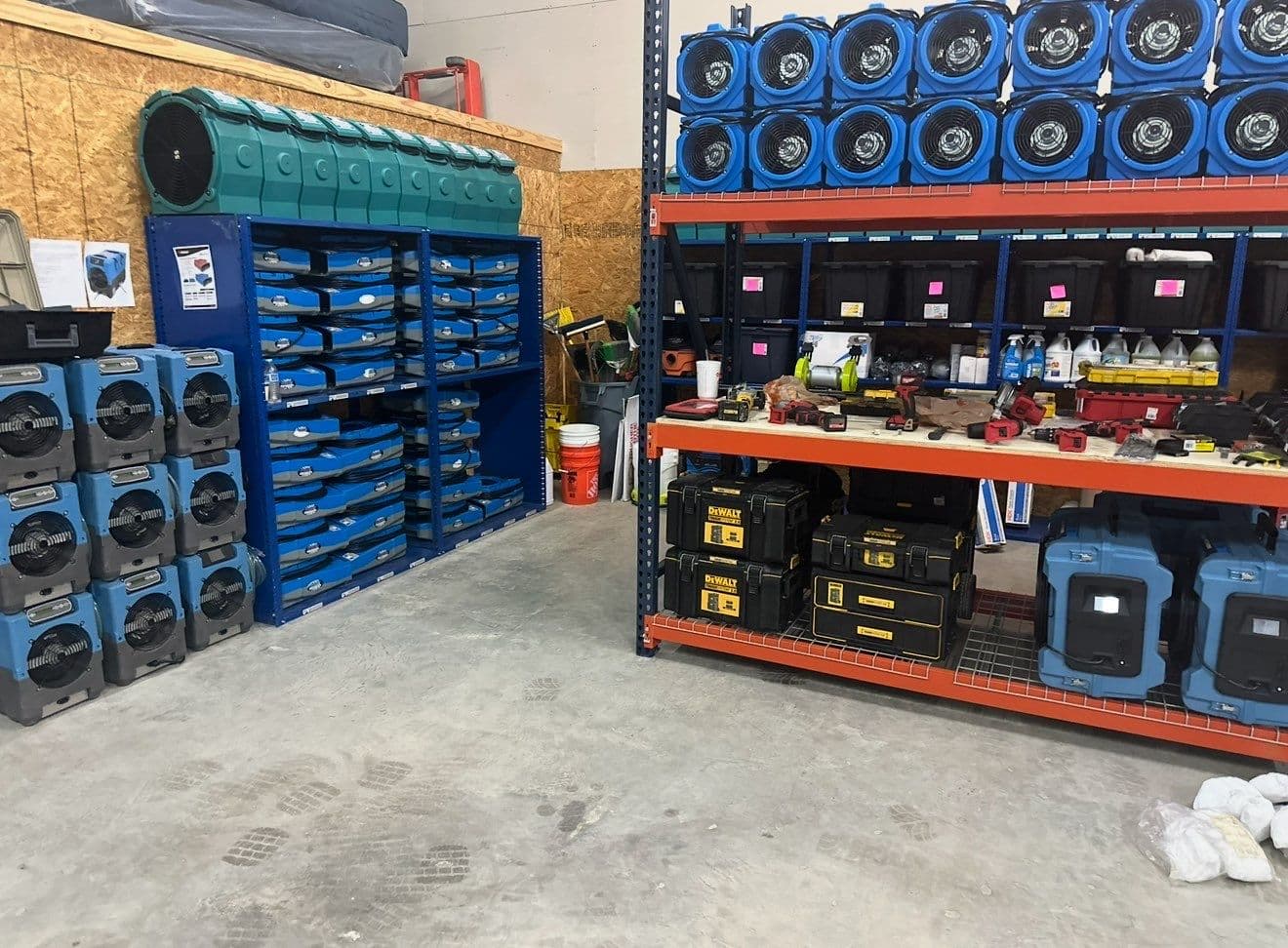
Professional restoration requires professional equipment. Here's exactly what we bring to your property and why each piece is critical.
Truck-Mounted Extractor
High-volume water removal
Processes up to 25 gallons per minute — far faster than portable units. Removes standing water from large areas before structural drying begins.
LGR Dehumidifier (Low Grain Refrigerant)
Structural drying
Removes moisture from air down to very low grain levels — essential in Houston's high-humidity climate. Standard refrigerant units can't reach the low GPP levels required for IICRC S500 dry standard.
Desiccant Dehumidifier
Specialty drying environments
Used in crawl spaces, attics, and conditions where refrigerant units are less effective. Absorbs moisture chemically rather than by cooling — effective at low temperatures and extreme humidity.
Axial Air Mover
Evaporative drying
Creates high-velocity airflow across wet surfaces to accelerate evaporation. Placed according to a psychrometric drying plan — not randomly. Number and placement determines drying speed.
FLIR Thermal Imaging Camera
Hidden moisture detection
Detects temperature differentials caused by evaporative cooling of wet materials — reveals moisture behind walls, under floors, and in ceilings invisible to the naked eye. Standard on every job.
Delmhorst & Tramex Moisture Meters
Moisture quantification
Pin meters measure moisture content of specific materials. Pinless meters scan large areas quickly. Both are required for IICRC S500 documentation and insurance drying reports.
Sling Psychrometer / Hygrometer
Atmospheric monitoring
Measures relative humidity, temperature, and dew point in the drying environment. Psychrometric calculations from these readings determine equipment efficiency and drying progress.
Submersible Pump
Flood-level water removal
For flooding scenarios with significant standing water depth. Removes bulk water before extraction equipment is deployed.
Injectidry & Floor Mat Systems
Hardwood floor drying
Specialty mat systems that inject low-humidity air beneath hardwood flooring — often the difference between saving and replacing $15,000+ in hardwood floors.
What does water damage restoration cost?
Water damage restoration costs vary significantly based on category of water, class of damage, square footage affected, and materials involved. Most homeowners don't pay out-of-pocket for covered water damage events — insurance covers the full scope. Understanding cost ranges helps you evaluate insurance settlements and identify underscoping.
Minor Category 1 — small appliance leak, limited to one room
Typically carpet, limited drywall, one or two rooms. Often covered in full by homeowner's insurance.
Moderate Category 1/2 — burst pipe affecting multiple rooms
Multiple rooms, potential subfloor involvement, contents impact. Insurance fully covers when caused by sudden event.
Significant Category 2 — appliance failure, bathroom leak through floor
Two or more floors affected, subfloor replacement, cabinetry. Requires WRT/ASD certified technicians.
Category 3 — sewage backup or floodwater
All porous materials must be removed and replaced. Scope depends on flood height and structure size.
Large-loss commercial or multi-unit
Scope-dependent. Business interruption documentation required. Large-loss teams deploy with additional equipment.
These ranges are for budgeting reference only. Actual cost depends on site-specific conditions and current material/labor pricing. If you have homeowner's insurance, your deductible is typically your only out-of-pocket cost for covered events.
We handle your insurance claim — from first call to final payment
Water damage is one of the most common homeowner insurance claims, and also one of the most disputed. Insurance adjusters are trained to minimize payouts. Our team documents every square foot of damage using Xactimate — the same estimating software your insurance company uses — ensuring nothing is underpaid or overlooked.
Your insurance carrier — detailed guides
Water damage restoration in Houston: what makes this market different
Houston receives an average of 49 inches of rain annually — more than Seattle — and sits on expansive clay soil that drains poorly. The city's bayou system (Buffalo Bayou, Brays Bayou, White Oak Bayou, Cypress Creek) regularly overtops during major storm events. Harris County contains hundreds of thousands of properties in FEMA Special Flood Hazard Areas (Zone AE — the 100-year floodplain). Hurricane Harvey (2017) deposited over 60 inches of rainfall on the metro area, flooding an estimated 200,000+ homes. The Tax Day Flood (April 2016) and Memorial Day Flood (May 2015) were each 500-year flood events. In this environment, water damage restoration is not a niche service — it is a core necessity. Our teams operate in every Houston zip code and throughout Harris, Fort Bend, Montgomery, Brazoria, and Galveston counties.
Frequently asked questions
How long does water damage restoration take?
The drying phase typically takes 3 to 5 days, though Class 4 damage involving hardwood floors, concrete, or plaster can require 7 to 10 days. The full restoration and rebuild — replacing drywall, flooring, and finishing work — adds additional time depending on scope. From initial water extraction to final walkthrough, most residential water damage jobs are complete within 1 to 3 weeks.
Will my homeowner's insurance cover water damage restoration?
Most standard homeowner's insurance policies cover sudden and accidental water damage — burst pipes, appliance failures, and roof leaks. They do not cover gradual leaks or maintenance-related damage. Flood damage from rising external water (rivers, storm surge) requires separate NFIP (National Flood Insurance) coverage. A water backup endorsement can cover sewage and drain backup. We help you identify exactly what your policy covers and document the loss to maximize your claim.
What's the difference between water mitigation and water restoration?
Water mitigation refers to emergency services that stop damage from getting worse — extraction, drying, and antimicrobial treatment. Water restoration refers to rebuilding what was damaged — replacing drywall, flooring, insulation, and structural components. First Response handles both phases under one contract, which simplifies insurance billing and ensures continuity between the mitigation and rebuild teams.
How quickly does mold grow after water damage?
Under the right conditions — warm temperatures, high relative humidity, and an organic food source like drywall or wood — mold can begin colonizing within 24 to 48 hours of water exposure. Houston's climate (average RH above 70%) accelerates this significantly. This is why professional water extraction and structural drying must begin immediately, and why antimicrobial treatment is applied as a standard part of the mitigation process.
What equipment do you use for structural drying?
Our standard water damage setup includes truck-mounted and portable extractors for water removal, LGR (Low Grain Refrigerant) dehumidifiers and axial air movers for structural drying, FLIR thermal imaging cameras to identify moisture hidden behind walls and under floors, and pin/pinless moisture meters and hygrometers for daily monitoring. All readings are logged and documented using professional software that generates insurance-ready drying reports.
Can I do water damage restoration myself?
For very minor incidents — a small appliance leak caught within minutes — consumer-grade wet vacuums and fans may be sufficient. However, most water damage events involve moisture in walls, under floors, and in insulation that is invisible to the eye. Without moisture meters and thermal imaging, you cannot know what is actually wet. Incomplete drying creates ideal conditions for mold growth inside walls, which is far more expensive to remediate than the original water damage.
What is Category 3 water damage?
Category 3 water — often called black water — is grossly contaminated water that poses serious health risks. Sources include sewage backups, floodwater from rivers or storm drains, and groundwater intrusion. Under IICRC S500 protocols, Category 3 water requires removal of all porous materials that were contacted: drywall, carpet, padding, insulation, and sometimes subfloor. Non-porous materials can be cleaned and disinfected. This is why sewage backup and flood damage jobs cost more than clean water incidents — significantly more material must be removed and replaced.
How do I know if I have hidden water damage in my walls?
Common indicators include musty odor, soft or spongy drywall, peeling paint or wallpaper, visible mold at wall bases, and unexplained spikes in your water bill. The most accurate method is thermal imaging — infrared cameras detect temperature differentials caused by wet materials behind walls and under floors. Our technicians perform a full thermal inspection on every job to ensure nothing is missed before equipment setup.
What is the IICRC S500 standard and why does it matter?
The IICRC S500 is the Standard for Professional Water Damage Restoration — the industry benchmark that defines how water damage should be assessed, categorized, dried, and documented. It establishes the categories of water contamination (1, 2, 3), the classes of damage (1–4), drying protocols, moisture documentation requirements, and antimicrobial treatment standards. When a restoration company claims to follow S500, it means their process is auditable, defensible to insurance adjusters, and meets the minimum standard of care established by the restoration industry. Every First Response Restoration technician is trained to S500 and holds WRT/ASD certifications.
Should I remove wet drywall myself after water damage?
We strongly recommend against removing drywall before a professional assessment. Here's why: (1) you may remove material that could have been dried in place, increasing your costs; (2) you may miss adjacent wet areas that need treatment; (3) if the water is Category 2 or 3 (gray or black water), handling contaminated drywall without proper PPE creates health risks; (4) insurance adjusters need to see the damage before demolition to authorize full coverage. Call us before removing anything — our assessment takes less than an hour and protects your claim.
Does water damage always lead to mold?
Not always — but the risk is significant and time-dependent. Mold requires moisture, an organic food source (drywall, wood, paper), and warmth. If water damage is professionally dried to IICRC S500 dry standard within 24–48 hours and antimicrobial treatment is applied, mold growth can be prevented in most cases. Houston's climate — consistently warm with high relative humidity — compresses that window. Our process applies EPA-registered antimicrobial agents to all affected materials as a standard step, not an upsell.
What is the difference between a water damage restoration company and a general contractor?
A water damage restoration company is specifically certified and equipped for moisture assessment, extraction, structural drying, and contamination control — skills that require specialized training (IICRC S500, WRT, ASD) and specialized equipment (LGR dehumidifiers, thermal cameras, moisture meters). A general contractor typically handles rebuild and construction. Many homeowners mistakenly hire a general contractor for the restoration phase, ending up with incomplete drying that leads to mold problems months later. First Response handles both phases — certified restoration through to permitted rebuild — under one contract.
How do I choose a water damage restoration company?
Look for four things: (1) IICRC Firm Certification — verifiable at iicrc.org, not just a claim; (2) Local presence — a company that will physically be at your property, not a national franchise dispatching a subcontractor; (3) Insurance experience — ability to produce Xactimate estimates and communicate directly with your adjuster; (4) References and reviews — real customer reviews on Google, BBB, and Yelp. Be cautious of storm chasers who appear in your neighborhood after a weather event without local credentials.
What happens to my belongings during water damage restoration?
For minor water damage, most contents can remain in place during drying. For significant water events — particularly when structural demolition is required — we provide complete pack-out services: professional inventory, careful removal, climate-controlled storage, and cleaning of salvageable items. Pack-out is covered by your homeowner's insurance as part of the water damage claim. See our Pack-Out & Contents Restoration service page for full details.
Need help now? We respond in 60 minutes.
24/7 emergency response — IICRC certified — insurance handled.