Mold doesn't stop growing while you wait.
AMRT-certified containment, HEPA remediation, and post-clearance air quality testing — Houston's most humid climate demands the highest standard.
S520
IICRC Standard
AMRT
Certification
Negative pressure
Containment
HEPA 0.3 micron
Filtration
Air quality test
Clearance
Insurance handled
Coverage
Mold is not a cosmetic problem — it is a biological hazard that colonizes porous materials and spreads through HVAC systems, releasing mycotoxins and spores into the air you breathe. In Houston's climate, where indoor relative humidity regularly exceeds 70%, mold can establish a colony within 24 to 48 hours of a moisture event. By the time visible growth appears, the colony has typically been growing for weeks.
Professional mold remediation is not bleach and a mask. It requires negative air pressure containment to prevent spore migration, HEPA filtration to capture airborne spores down to 0.3 microns, IICRC S520-compliant removal protocols, and post-clearance air quality testing by a third-party industrial hygienist to confirm the space is safe for re-occupancy.
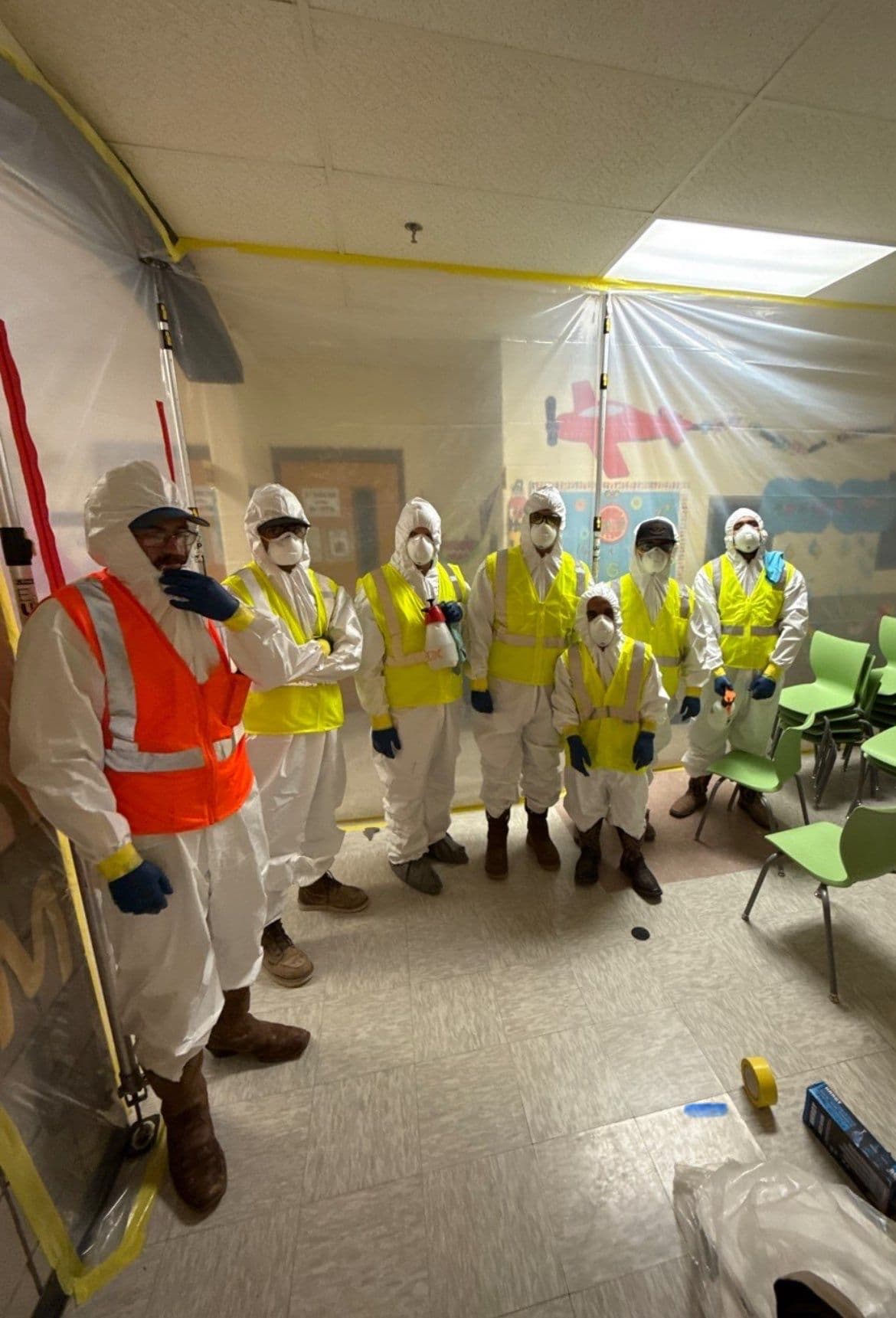
First Response Restoration's AMRT (Applied Microbial Remediation Technician) certified crew follows the IICRC S520 Standard for Mold Remediation on every job. We do not guess — we test, contain, remediate, and verify. Every job includes documentation for your insurance claim and a post-remediation verification report.
What mold actually is — and why it's a health concern
Mold is a fungal organism that reproduces by releasing microscopic spores into the air. Common indoor species include Cladosporium, Penicillium, Aspergillus, and Stachybotrys chartarum (often called "black mold"). These organisms produce mycotoxins — secondary metabolites that are toxic to humans and animals. Prolonged exposure is associated with respiratory illness, neurological symptoms, and immune system suppression. In Houston's high-humidity environment, virtually any water damage event that is not properly dried within 48 hours creates conditions for mold growth.
Containment, removal, and air quality: the IICRC S520 protocol
Effective mold remediation requires preventing cross-contamination during removal. Our technicians establish critical barriers using 6-mil poly sheeting and negative air pressure (creating a pressure differential that prevents spores from migrating to clean areas). HEPA-filtered air scrubbers run continuously during work. All contaminated materials are double-bagged in 6-mil poly, sealed, and disposed of per EPA guidelines.
Signs you need professional mold remediation
Real jobs. Real results.
Our mold remediation process — step by step
Mold inspection & air sampling
A certified technician performs a visual assessment and collects air samples using spore trap cassettes. Samples are sent to an accredited laboratory for analysis. Results identify species present, spore concentrations, and whether levels exceed outdoor baseline.
Containment setup
Critical barriers are constructed using 6-mil poly sheeting. Negative air pressure is established using HEPA-filtered negative air machines. Entry/exit airlocks are installed to maintain containment integrity throughout the job.
HEPA air scrubbing
HEPA air scrubbers run continuously, filtering all air within the contained area. This captures airborne spores before, during, and after removal work.
Mold removal & material disposal
Contaminated porous materials (drywall, insulation, wood) are removed, double-bagged in 6-mil poly, and disposed of per EPA guidelines. Non-porous surfaces are cleaned and treated.
Antimicrobial treatment
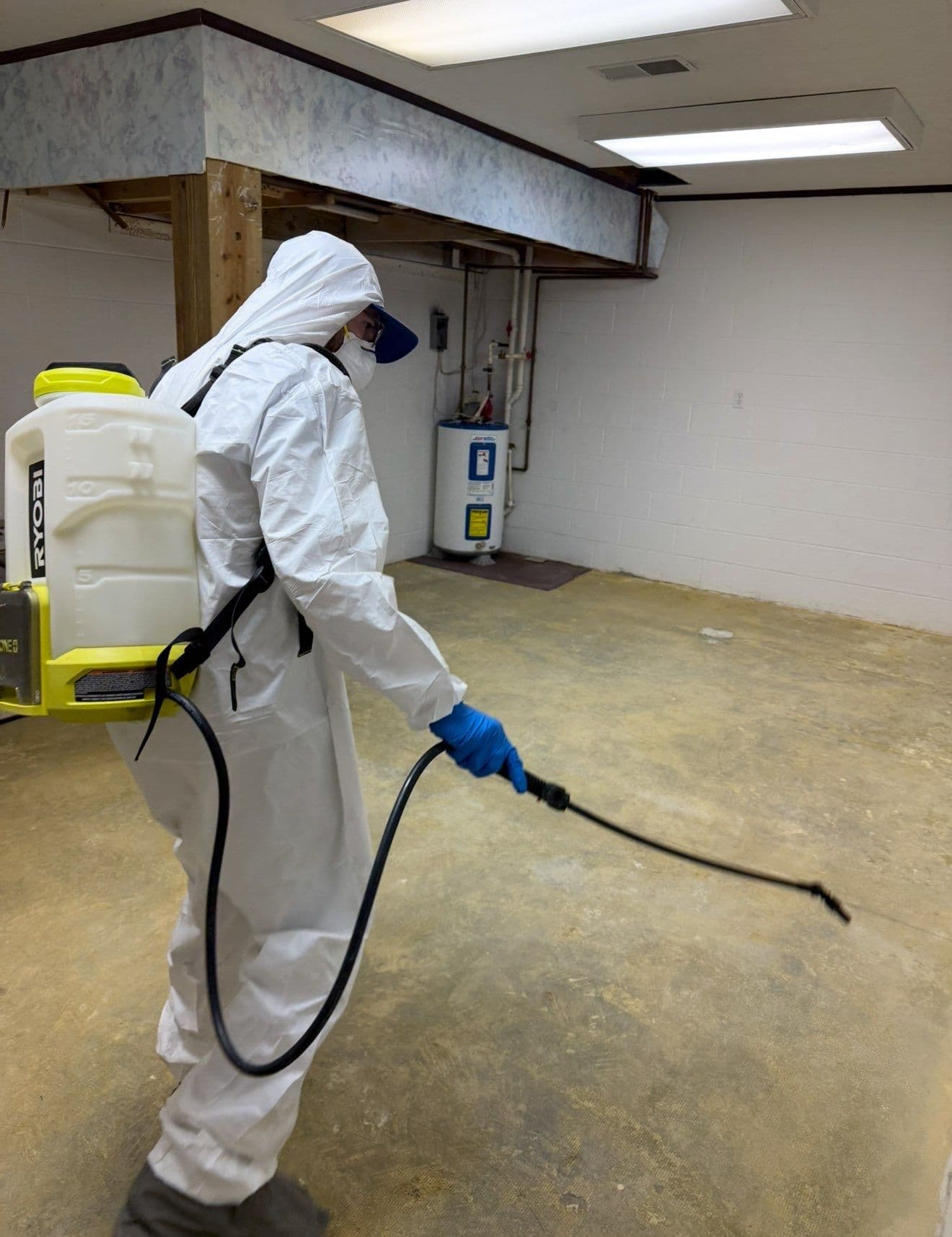
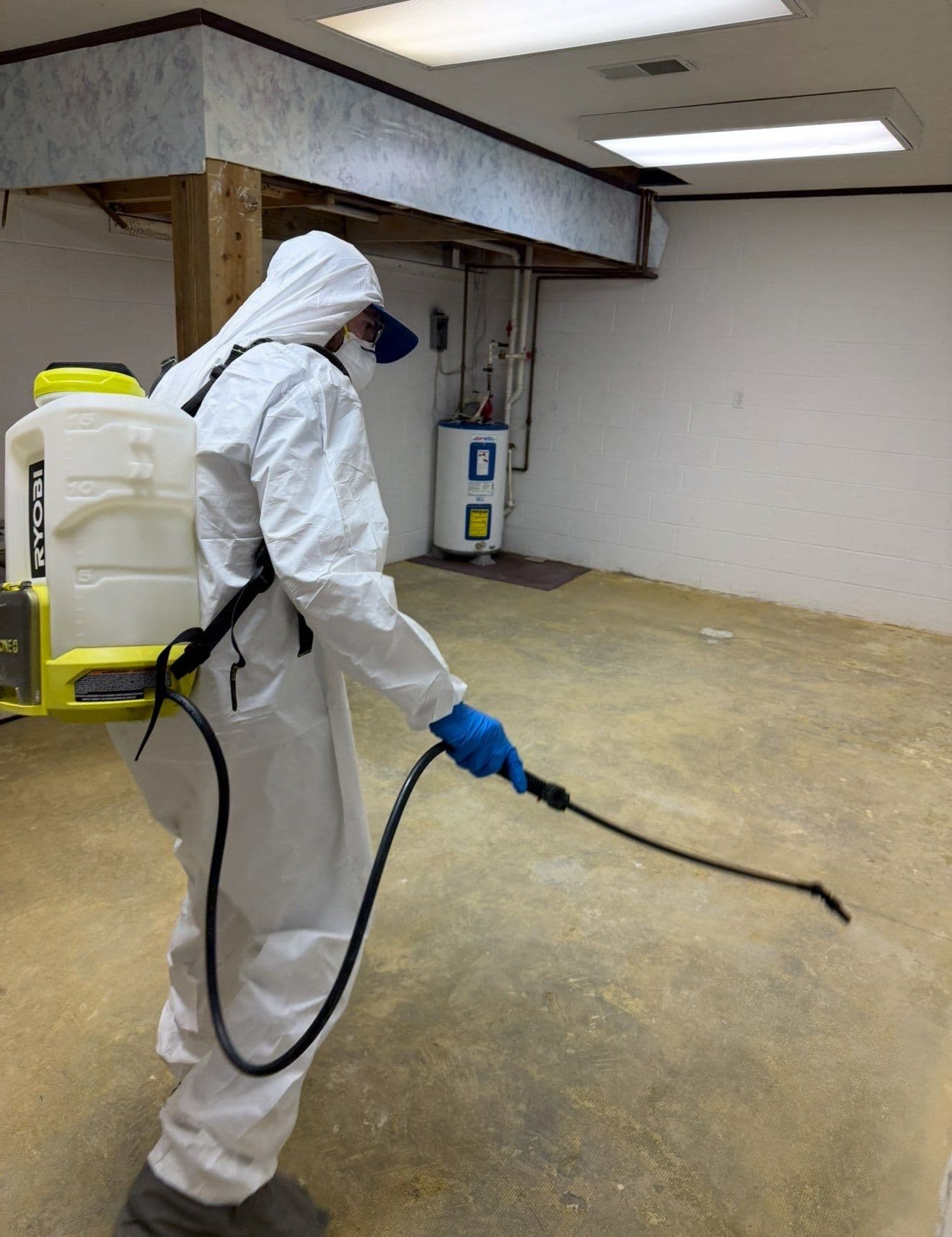
EPA-registered fungicidal agents are applied to all treated surfaces. Application method and dwell time follow EPA label requirements.
HEPA vacuuming & wipe-down
All surfaces within the contained area are HEPA-vacuumed and wiped with antimicrobial solution. This removes settled spores before clearance testing.
Post-remediation verification
A third-party industrial hygienist collects clearance air samples. Spore counts must return to ambient (outdoor) levels before containment is removed and the space is cleared for re-occupancy.
Equipment we use — and why it matters
Professional restoration requires professional equipment. Here's exactly what we bring to your property and why each piece is critical.
Negative Air Machine (NAM)
Containment pressure control
Creates negative air pressure inside the containment zone so contaminated air flows IN, not out. HEPA-filtered — captures particles as small as 0.3 microns, including mold spores.
HEPA Air Scrubber
Airborne spore capture
Continuously filters air within the work area throughout the job. Required by IICRC S520 for any mold remediation exceeding 10 square feet of affected area.
Poly Containment Barriers
Isolation of work zone
6-mil polyethylene sheeting seals the remediation area from clean spaces. Critical barriers: floor-to-ceiling poly, negative pressure maintained, entry/exit airlock maintained.
HEPA Vacuums
Dry remediation
Industrial HEPA vacuums remove loose mold contamination from surfaces before wet cleaning. Consumer vacuums without HEPA filters will distribute spores rather than capture them.
ATP Meter (Adenosine Triphosphate Testing)
Post-remediation verification
ATP testing measures biological activity on surfaces — a rapid indicator of whether surfaces are acceptably clean after remediation. Used as part of our internal quality control before PRV testing.
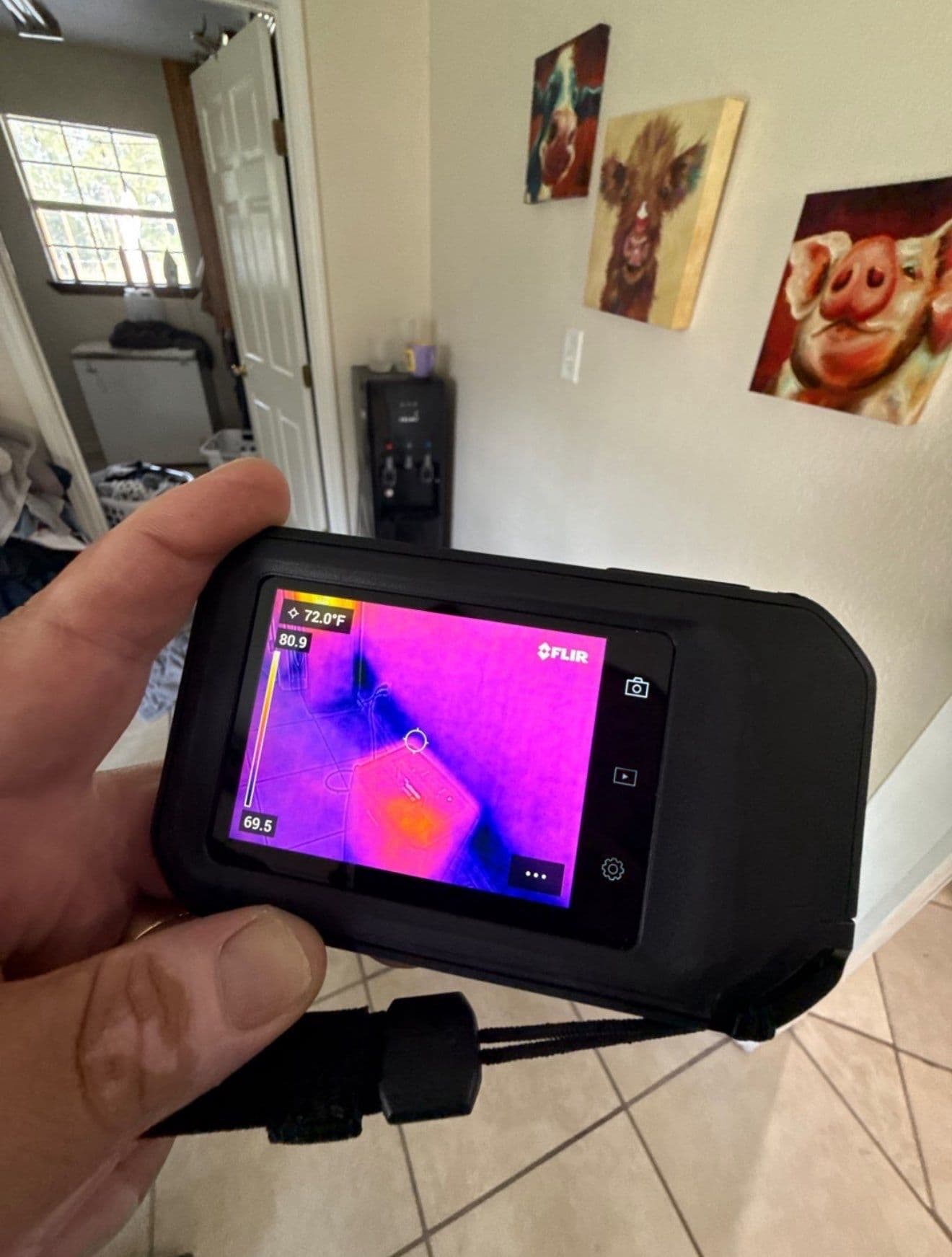
Moisture Meters & Thermal Camera
Source identification
Mold follows moisture. Finding and eliminating the moisture source is the only way to prevent recurrence. We identify every moisture intrusion point before remediation begins.
Antimicrobial Fogger
Surface treatment
Botanical or EPA-registered antimicrobial agents applied to remediated surfaces and the surrounding area. Inhibits regrowth during the drying and reconstruction phase.
How much does mold remediation cost?
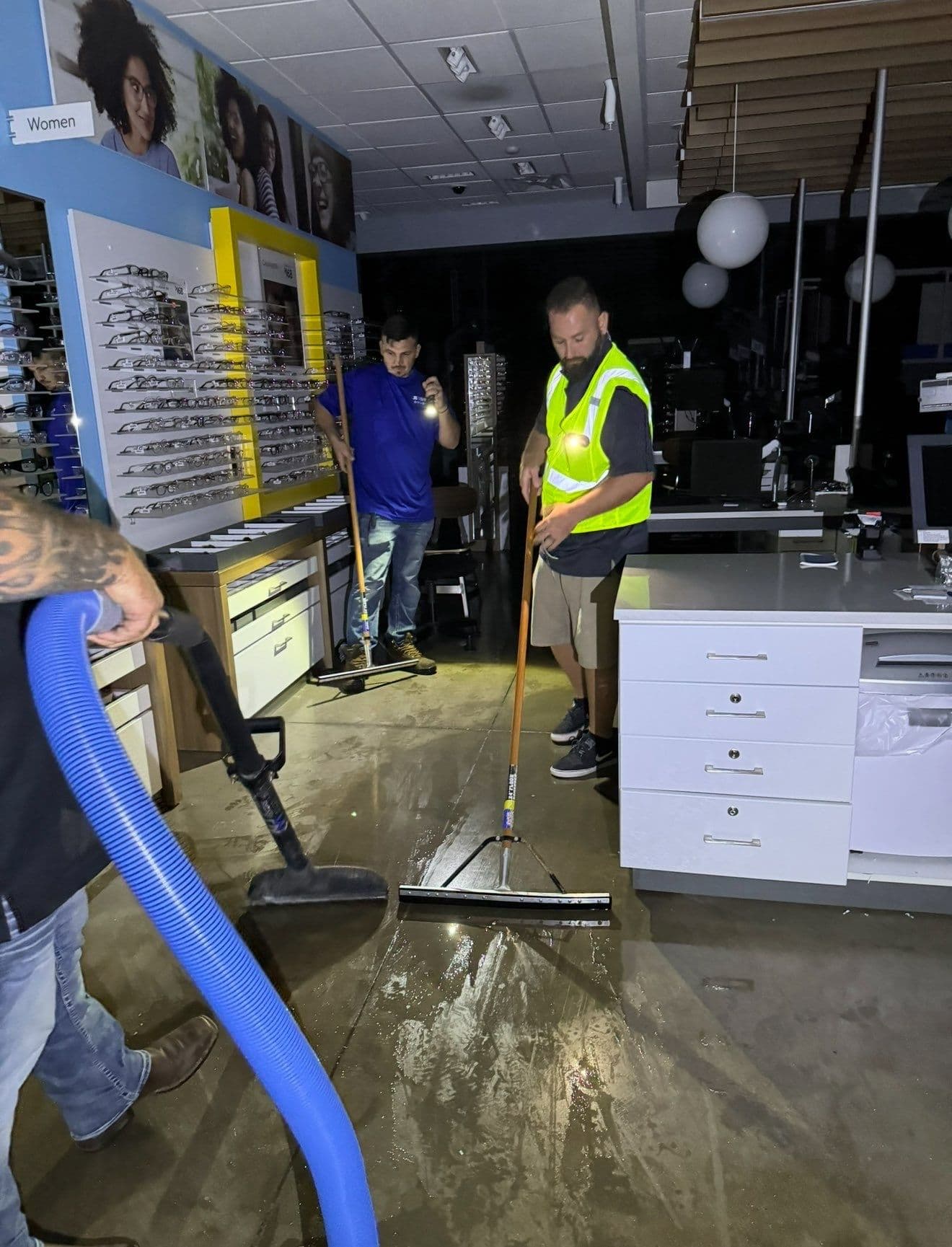
Mold remediation cost depends on the extent of contamination, the species identified, the materials affected, and whether the moisture source requires remediation as well. Most mold resulting from a covered sudden water event is paid by homeowner's insurance.
Limited surface mold — small bathroom or HVAC area
Surface-level contamination, no structural involvement, no containment required.
Moderate — wall cavity or crawl space contamination
Requires containment, HEPA filtration, material removal. Most covered under homeowner's policy if water event is covered.
Significant — multiple rooms or structural members
Extensive structural involvement. Full containment system, negative air pressure, and PRV testing required.
Severe — whole-house or long-term undetected contamination
Pervasive contamination throughout structure. Often involves substantial structural removal and replacement.
If your mold resulted from a sudden water event (burst pipe, appliance failure, storm damage) that is a covered insurance peril, your homeowner's policy typically covers mold remediation up to your policy's mold sublimit — often $5,000–$25,000. We help maximize this coverage.
Mold remediation and insurance: what's covered
Mold coverage depends heavily on the cause. Mold resulting from a covered water damage event (burst pipe, appliance failure) is typically covered. Mold from long-term neglect or gradual leaks is usually excluded. We document the causation chain — proving the mold resulted from a covered event — which is critical to getting your claim approved.
Why mold remediation is a critical need in Houston
Houston's climate — average annual relative humidity above 70%, temperatures that rarely drop below freezing, and frequent flooding — creates near-perfect conditions for mold growth year-round. The metro area experiences multiple major flood events per decade, and tens of thousands of homes flooded during Hurricane Harvey still show elevated mold loads. Houston's building stock contains significant amounts of paper-faced drywall and organic insulation — ideal substrates for mold colonization. Our team has performed remediation throughout Harris, Fort Bend, Brazoria, Galveston, and Montgomery counties, with specific experience in post-Harvey remediation, slab foundation moisture intrusion, and HVAC system mold contamination.
Frequently asked questions
Is mold dangerous to my health?
The health impact of mold exposure depends on the species, the concentration of spores, the duration of exposure, and individual sensitivity. Certain species — particularly Stachybotrys chartarum (black mold) and some Aspergillus and Penicillium strains — produce mycotoxins that are toxic to humans. Symptoms can include respiratory irritation, chronic coughing, headaches, fatigue, and in severe cases, neurological effects. Immunocompromised individuals, children, and the elderly face greater risk. Any visible mold growth in a living space should be treated as a health concern.
Can I remove mold myself with bleach?
Bleach is effective on non-porous surfaces but does not penetrate porous materials like drywall, wood, and insulation where mold root structures (hyphae) grow. Attempting to clean mold with bleach on porous materials often leaves the hyphae intact while the surface appears clean. More critically, disturbing mold without proper containment releases massive quantities of spores into the air, spreading the contamination to previously clean areas. Professional remediation with negative air containment is required for anything beyond very small surface areas on non-porous materials.
How much does mold remediation cost?
Mold remediation costs vary widely based on the scope of contamination, the materials affected, and whether structural repair is needed. Small localized areas (under 10 sq ft, single room, non-porous surfaces) may cost $500–$1,500. Larger contamination involving wall cavities, multiple rooms, or HVAC system contamination can range from $3,000 to $15,000+. Whole-home or post-flood remediation projects can exceed $30,000. We provide detailed Xactimate estimates that your insurance adjuster will accept.
How do I know the mold is really gone after remediation?
The only way to confirm successful mold remediation is post-remediation verification (PRV) — air quality testing performed by an independent industrial hygienist after work is complete. PRV compares indoor spore counts to outdoor baseline levels. When indoor levels match or fall below outdoor levels for the species present, the remediation is considered successful and the space is cleared for re-occupancy. We never self-clear our own jobs — we use independent third-party hygienists to ensure objectivity and to provide documentation your insurance company will accept.
Does mold remediation include fixing what caused the mold?
No — mold remediation addresses the mold itself. The moisture source must be identified and corrected before or concurrent with remediation, otherwise mold will return. We help identify the moisture source (plumbing leak, roof leak, HVAC condensation, foundation intrusion) and can coordinate repair, but the mold remediation scope covers only the biological contamination and affected materials.
How long does mold remediation take?
Small to medium remediation projects (one to two rooms) typically take 1 to 3 days for the remediation work, plus an additional day for post-clearance testing results. Larger projects may take 3 to 7 days. Lab results for clearance air samples typically return within 24 to 48 hours. Full project completion including structural restoration (replacing drywall, insulation, and finishes) adds additional time.
Need help now? We respond in 60 minutes.
24/7 emergency response — IICRC certified — insurance handled.